


Agfa versus Gucci: how one single word can cost millions. Patent games for smart entrepreneurs. I’m Olena Yakobchuk — welcome to The Patent Strategist’s Approach.
📍What entrepreneurs can learn from the patent battle between a tech company and a luxury brand
This edition is for entrepreneurs who have reached the level of investors — those who can afford to play patent games. Businesses often underestimate patents, believing that “we produce something old and well-known, we dont need patents…” until they receive a notice of infringement from patent-holding competitors. Or, on the contrary — inspired by their capital, they get carried away with the idea of monopoly, yet lack a strategy, data, or a team to realize it.
Because such a task requires the effort and skill of a true professional team — patent strategists, marketers, and scientists/ technologists with an experimental base to support these ambitions. Today’s case shows that a patent is not just a legal document. It is an economic strategy tool for market control.
Case facts: Technology vs Fashion
Recently, the court in Hamburg (UPC, Local Division Hamburg, Case ID: ACT_561734/2023) delivered its decision in the case of Agfa vs Gucci.
Agfa, a Belgian technology company, filed a lawsuit against the Italian luxury brand Gucci (specifically, nine companies
belonging to the Gucci family of luxury brands and to the Saint Laurent and Balenciaga groups) over patent EP 3 388 490, which covers a method of decorating leather by applying a colored image.
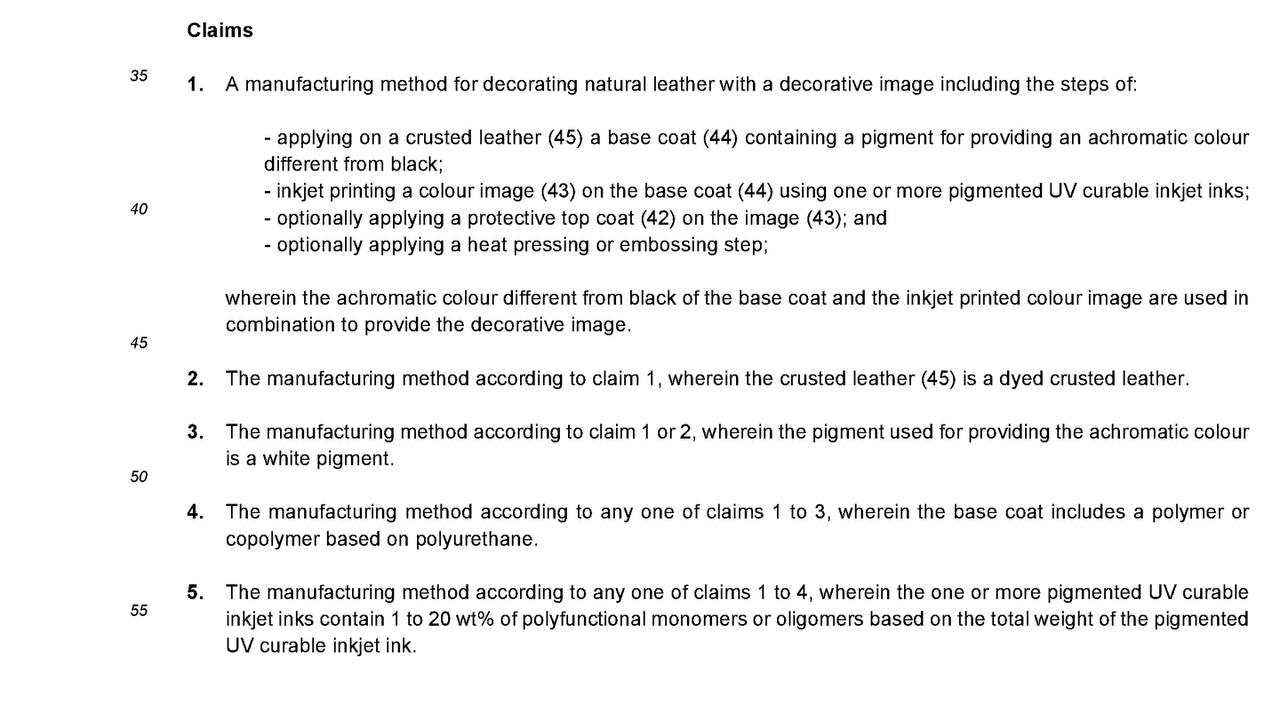
Here is the essence of the claim wording:
“…covering the leather with a base coating containing a pigment of an achromatic color other than black, applying a colored image by inkjet printing, curing by UV radiation, optionally applying a top coat and hot pressing…”
I’m quoting the claim text here so you can read it carefully yourself.
Fig. 1
🎯 The essence of the dispute
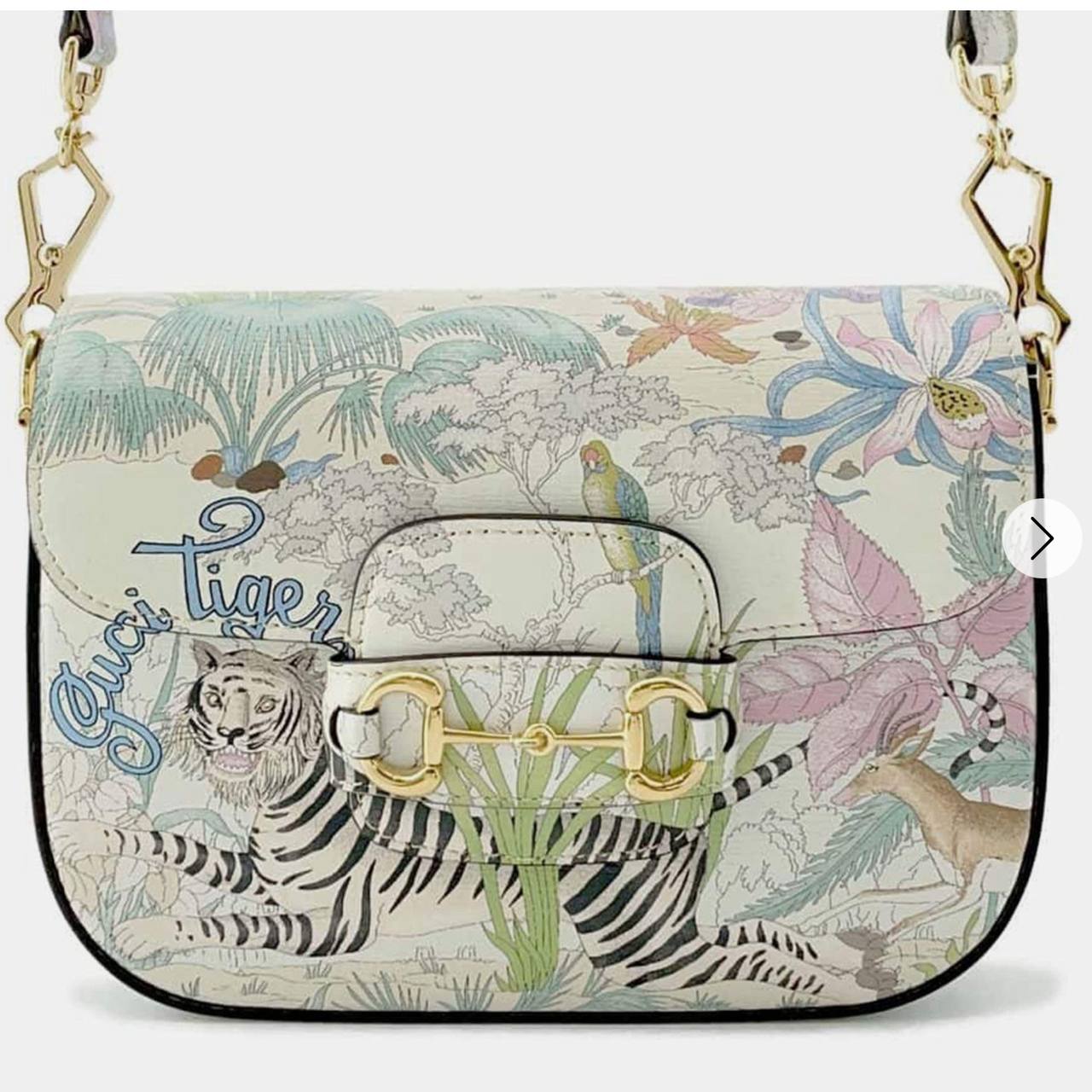
During the proceedings, Agfa sought to include all light shades — such as ivory, pale yellow, and similar tones — arguing that Gucci’s designs hardly used truly achromatic colors.
In doing so, Agfa relied on a broad term without providing a precise interpretation — effectively attempting to monopolize a wider portion of the market by covering colors like ivory or pale yellow.
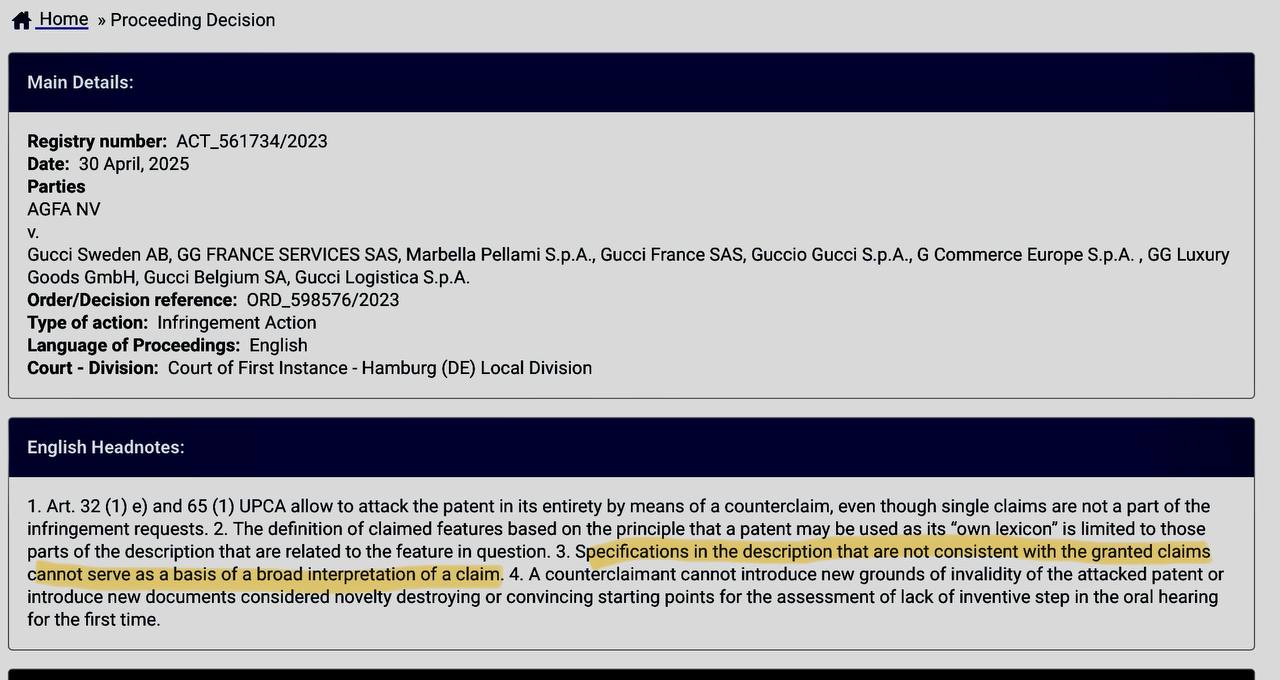
However, this intention was not reflected in the key document — the patent claim itself.
Let’s return to the claim wording:
Claim 1: “…covering the split leather (45) with a base coating (44) containing a pigment that forms an achromatic color other than black…” Claim 3: “…the achromatic color is white…” In court, Agfa referred to the patent description — where mixed pigments were mentioned — and tried to broaden the meaning of “achromatic color” by citing examples from the specification.
But in the claims, which legally define the patent’s scope, Agfa itself had limited the term in dependent Claim 3 to:
“…achromatic colour is a white pigment.” In other words, there was no mention of ivory or any other shades.
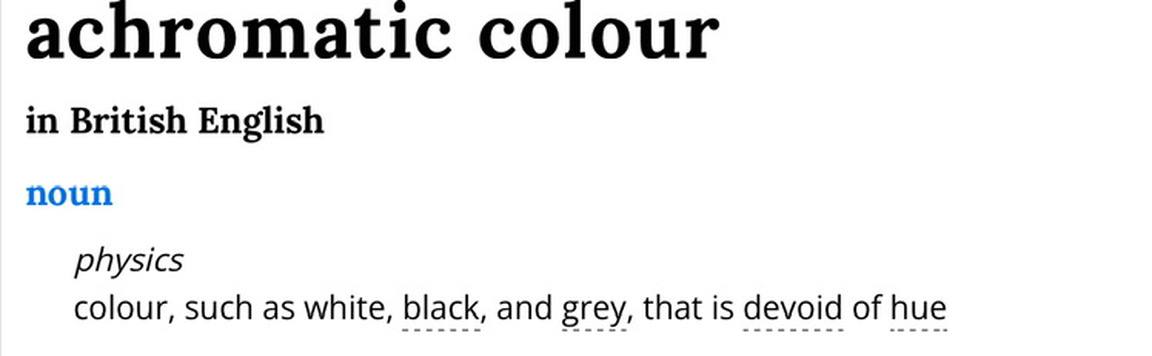
Thus, the invention’s claim, through its own dependent formulation, explicitly defined “achromatic” as white pigment only. Gucci, meanwhile, demonstrated that “achromatic” refers solely to white, grey, and black — colors without a dominant hue. Agfa’s own patent description supported this interpretation: “Blue and green are chromatic colours, while white, grey and black are achromatic colours, as they have no dominant hue.” (para. [0021]) Ironically, the wording Agfa used in its own patent ended up working in Gucci’s favor.
The same conclusion aligns with the dictionary definition (Collins Dictionary):
Achromatic — white, black, or grey without hue.
Fig. 3
Gucci’s products with ivory coatings do not fall under Agfa’s patent. And most likely, Gucci is already preparing its own.
Lessons for Entrepreneurs For entrepreneurs who invest in patents:
- Set a clear objective.,
Define exactly what you want to monopolize: a range or a point, a color or a property.
Outline the boundaries of your ambition — but stay aware of the competitors’ realities — so your strategist can build a monopoly that aligns with your goals.
It’s not enough to say “achromatic” and expect to cover all shades; you need to specify “white (ΔE < 2)” or “5–10% pigment content.”
- Provide data.,
Patent strategists are not magicians. Without tables, examples, and laboratory data, a patent remains a hypothesis. Yes, professionals can model it — but that takes time. It’s always better to base your patent on real evidence.
To create a narrow, point, or selective patent, you need a solid evidential base — examples and pigment data included in the claims. Sometimes, one evidential photo can save a monopoly.
- Engage a marketer and a scientist at the filing stage.,
Together, determine what constitutes commercial value: the effect, the shade, the method, or the parameter. A patent strategist must have open access to both marketing and R&D insights — developing a strategy that matches the entrepreneur’s long-term vision. That’s how you avoid repeating the Thermos or Aspirin stories. Because a patent is both a scientific fact and a business instrument.
- Consider jurisdiction.,
• Europe (UPC): narrow interpretation • USA: functional interpretation • China: evidence-based interpretation One application — three different risks. That’s where strategy makes all the difference.
- Remember:,
Even a valid patent doesn’t guarantee monopoly — not without the right patent strategy. And most importantly: Work with professionals. There are few of us — but we do exist.
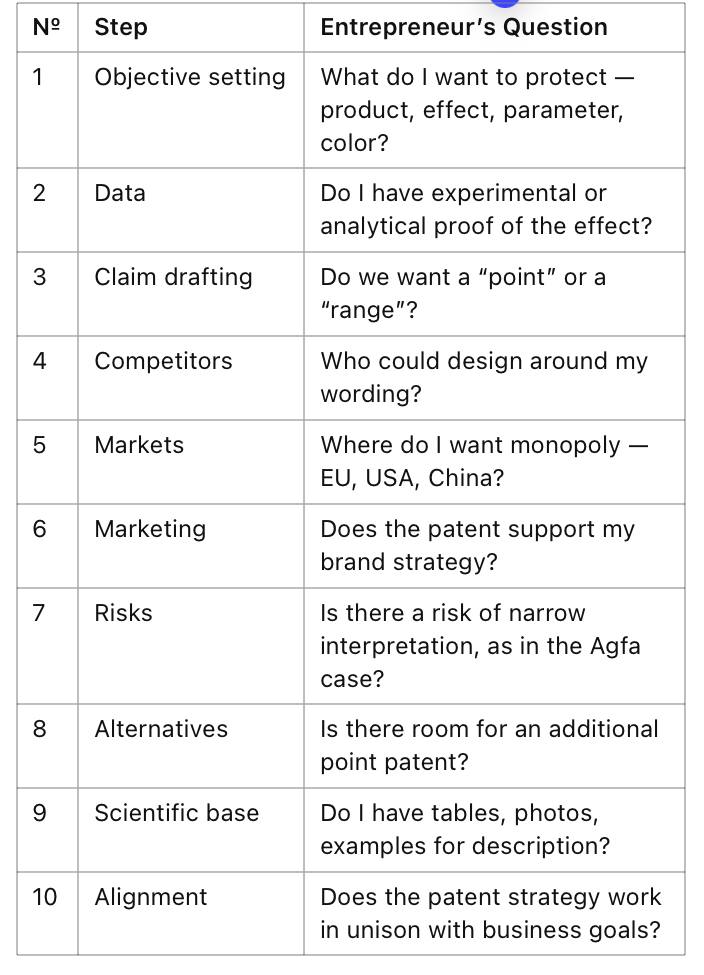
Patent Pre-Filing Checklist
(optional visual insert or downloadable checklist could go here)
Conclusion
Agfa was left with a valid, yet effectively toothless patent.
Gucci — with a strong product and a potential new application.
The moral is simple: Broad wording without evidence and professional precision does not create a monopoly. Only a clear goal, a strategic team, and a point-based professional approach can build a true patent advantage.
https://www.facebook.com/share/1F4TMXjWxB/?mibextid=wwXIfr
https://www.instagram.com/yakobchuk.olena/